

What are the processing procedures and technologies involved in precision shaft machining?
Category:
News
Published:2022-03-22
The formulation of the precision shaft machining technology roadmap is aimed at establishing the overall layout of the technical process. The key objectives are to select the manufacturing method for each surface, determine the sequence of metalworking operations for each surface, and—overall— Precision shaft machining The number of technologies involved in the process, and so forth.
Anhui Mingyao Equipment Application Technology Co., Ltd. 

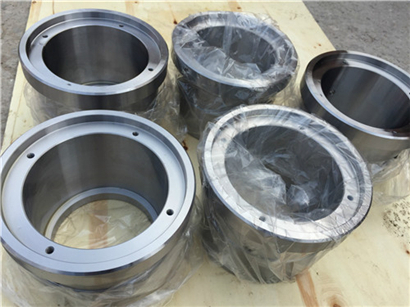
The key surface of various precision shaft components is the outer cylindrical surface of each shaft diameter. For hollow shafts, the accuracy of the inner bore is typically not strictly specified, whereas the accuracy requirements for secondary surfaces on precision shafts—such as threads, sprockets, and keyways—are exceptionally high. Therefore, Precision shaft machining The production process flow primarily focuses on the sequence of manufacturing the outer circle and effectively interleaves the fabrication of secondary surfaces. Next, I’ll explain to you the typical production process flows for various precision shaft components, taking into account differences in tolerances and material types.

The typical process flow for precision shaft parts made from carbon-alloy steel is as follows: Material charging—forging—annealing—drilling the primary hole—boring—semi-finishing turning and finishing turning—carbon doping (or carbon-nitrogen co-diffusion)—tempering and low-temperature tempering—rough grinding—secondary surface treatment—fine polishing. The typical production process flow for precision shafts made from precision-adjustment steel is as follows: Material charging—forging—annealing (annealing)—drilling the primary hole—boring—adjustment—semi-finishing turning and finishing turning—surface hardening and tempering—rough grinding—secondary surface treatment—fine polishing. The production process flow for precision nitrided steel shaft components is as follows: Material charging—forging—annealing (annealing)—drilling the primary hole—boring—carburizing—semi-finishing turning and finishing turning—low-temperature holding—rough grinding—nitriding treatment—secondary surface treatment—fine polishing—honing. The overall production process flow for precision shaft components subjected to through-hardening is as follows: Material charging—forging—annealing (annealing)—drilling the primary hole—boring—adjustment—semi-finishing turning and finishing turning—secondary surface treatment—through-hardening—rough grinding—low-temperature holding—fine polishing.
Previous page

Follow our official WeChat public account.
Email:admin@ahmyjxzb.com
Address: Room 101, Building 7, No. 2766 Tangkou Road, Economic and Technological Development Zone, Hefei City, Anhui Province
Copyright © 2025 Anhui Mingyao Machinery & Equipment Application Technology Co., Ltd. All Rights Reserved.
Powered by: www.300.cn Hefei | Tag